
The Ultimate Guide to Beauty Gadgets That Actually Work
The Ultimate Guide To Beauty Gadgets That Actually Work
12/25/202512 min read
Updated for 2025 · Evidence-based · This post contains affiliate links. I only recommend devices I would personally use or deeply research.
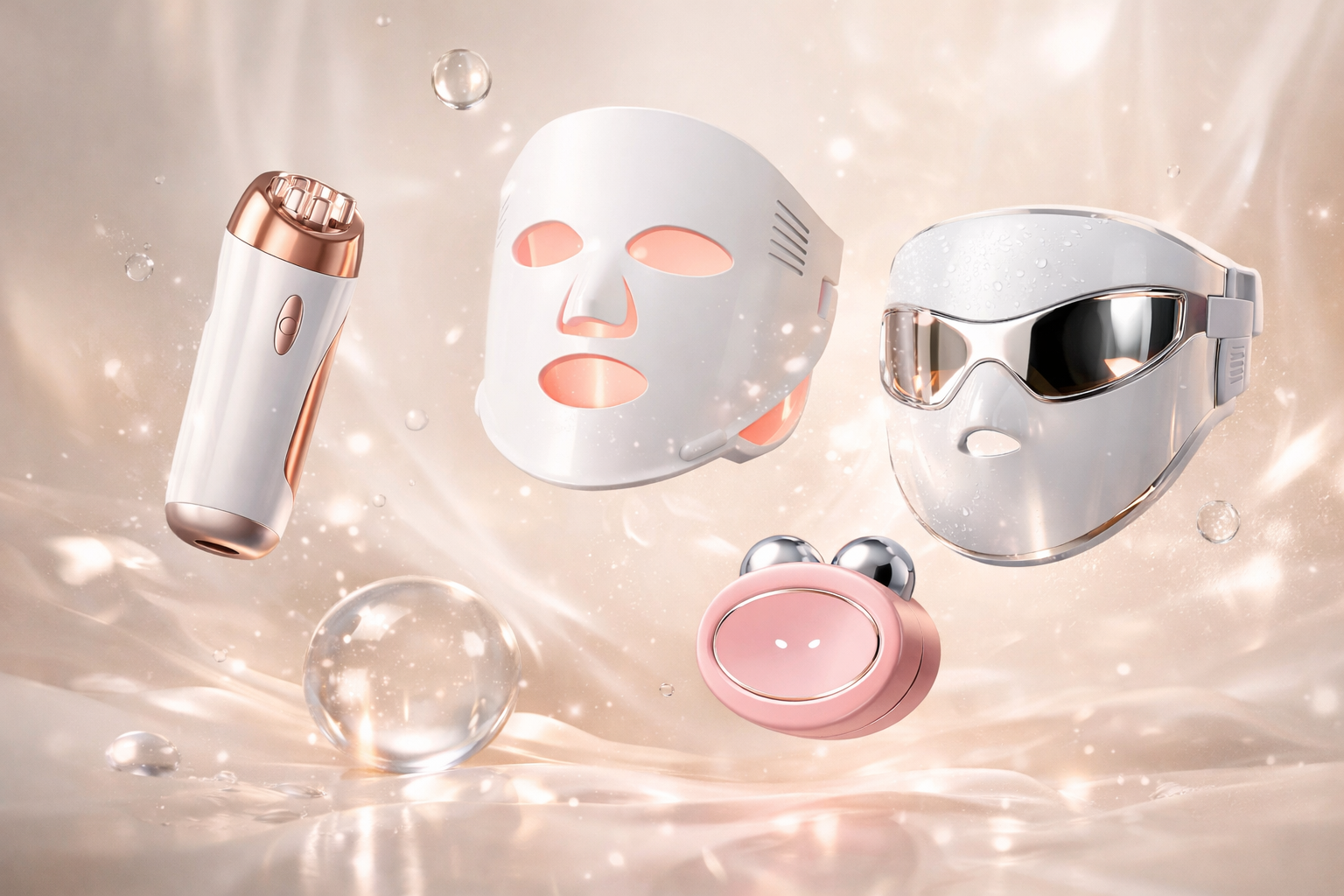
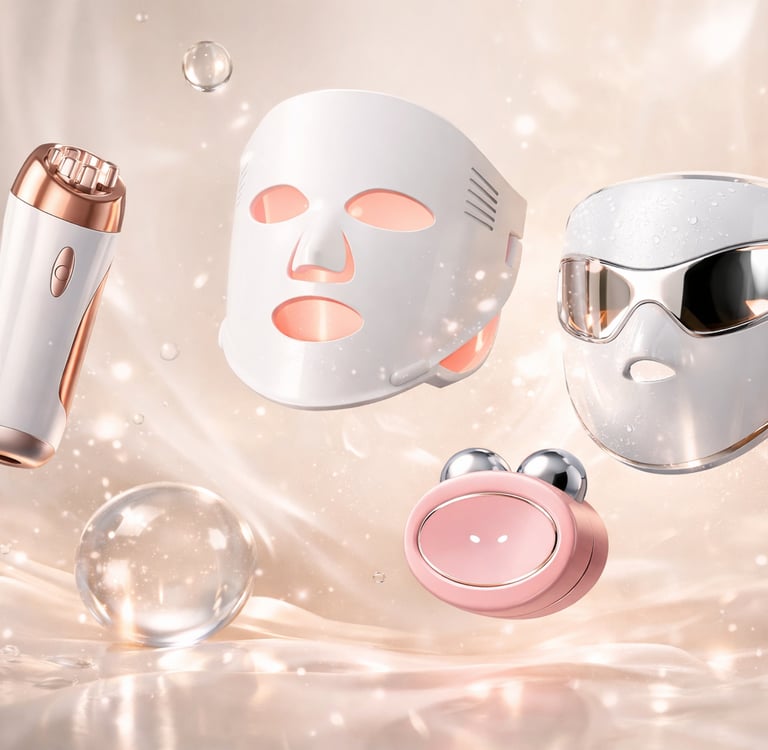
Beauty gadgets are everywhere right now — LED masks, microcurrent devices, skin boosters, at-home radiofrequency, you name it. Some genuinely improve your skin. Others are beautifully marketed dust collectors.
At The Dew Archive, the focus is skin quality, longevity, and informed choices — not hype. This guide breaks down the best beauty gadgets that actually work, why they work, who they’re for, who should skip them, and how to use them correctly.
If you’ve ever wondered whether beauty tech is worth the investment — this is your answer.
How to Choose a Beauty Gadget
Before buying any device, ask yourself:
✔️ Does it support natural skin biology?
✔️ Is there clinical or dermatological evidence behind it?
✔️ Can I realistically use this consistently?
✔️ Do I understand the risks as well as the benefits?
Skin responds best to low-stress, repeatable stimulation. Anything promising instant transformation with no effort is usually too good to be true.
1. LED Light Therapy Masks — The Best ROI in Beauty Tech
Best for: Acne, redness, pigmentation, collagen support, post-treatment healing
LED (Light Emitting Diode) therapy is one of the most studied non-invasive dermatological technologies. Specific wavelengths penetrate the skin and trigger cellular processes without causing injury.
Red light (630–660 nm): stimulates collagen and reduces inflammation
Near-infrared (830–880 nm): penetrates deeper to support repair and elasticity
Blue light (415 nm): targets acne-causing bacteria
The results are subtle but cumulative, consistency matters. If you’re choosing between viral beauty gadgets, this comparison highlights what actually matters — and who each device is best for.
Tap the device name to see the latest price and reviews on Amazon. This post contains affiliate links. I only recommend devices I genuinely believe are worth the investment.
If your goal is visible glow with minimal effort, the Medicube Age-R Booster Pro is the easiest place to start, it works with products you already own and instantly upgrades your routine.
For long-term skin health and collagen support, an LED mask like CurrentBody or Shark CryoGlow is a smart investment, especially if you’re consistent.
What to look for in a high-quality LED mask
Clearly stated wavelengths (numbers matter)
Near-infrared included for anti-aging
High LED density for even coverage
FDA-cleared or CE-marked
Best LED masks
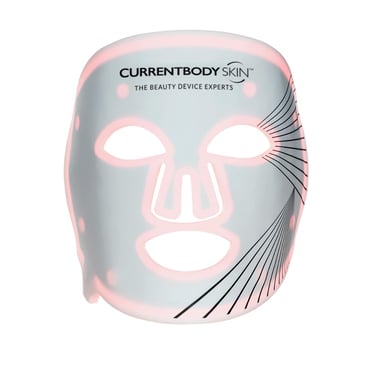
Best overall: CurrentBody Skin LED light Therapy Mask.
A gold-standard LED mask that balances clinical credibility with at-home ease. Its red and near-infrared wavelengths are backed by published studies, making it a reliable choice for improving skin firmness, tone, and overall radiance with consistent use. This is the mask for those who value results that build slowly and visibly over time.
Best for anti-aging: Shark CryoGlow LED Face Mask
Where LED therapy meets skin-calming innovation. The CryoGlow pairs multi-wavelength LED light with cooling technology to reduce inflammation while targeting fine lines and texture — a thoughtful option for aging skin that’s also prone to sensitivity. Ideal if you want correction without overstimulation.
Best luxury investment: Dr. Dennis Gross DRx SpectraLite FaceWare Pro
A cult-favorite for a reason. This dual-mode mask combines red and blue LED therapy in a structured, clinic-inspired design that prioritizes consistency and coverage. A considered investment for those who prefer dermatologist-developed tools and a more treatment-like experience at home.
LED-masks are best for you if:
You want long-term skin improvement without downtime
You’re acne-prone, sensitive, or post-procedure
You prefer low-risk, science-backed treatments
Skip if you expect instant results or you won’t use it at least 3x/week.
2. Microcurrent Devices — Sculpting, Not Skin Change
Best for: Facial lift effect, muscle tone, lymphatic drainage
Think: Pilates for your face — results come from consistency, not intensity.
Microcurrent devices work by delivering very low-level electrical currents that mimic the body’s natural bioelectric signals. These currents stimulate the facial muscles (not the skin itself), which is why the results are often described as lifting or sculpting rather than “transformational” in a skin-quality sense.
If LED is about cellular health, microcurrent is about structure.
What microcurrent actually does
With regular use, microcurrent devices can improve facial tone by encouraging muscles to contract and relax more efficiently. Over time, this can create a subtly lifted appearance — cheekbones look more defined, jawlines a little sharper, and facial contours more supported.
Another underrated benefit is circulation. Microcurrent increases blood flow and lymphatic movement, which often translates into a healthier glow and reduced puffiness, especially in the lower face and jaw area.
What microcurrent doesn’t do
Microcurrent does not change skin texture, pigmentation, acne, or deep wrinkles. It also doesn’t rebuild collagen in the way LED therapy can. The lift you see is real — but it’s functional, not structural.
That’s why results fade if you stop using the device. Think of it like stopping workouts: the muscles gradually return to baseline.
The best microcurrent devices right now
Best for beginners: FOREO BEAR
Intuitive, compact, and hard to overdo. A great entry point if you want visible toning without a steep learning curve.
Best professional-level option: Medicube Age-R Booster Pro
A more advanced device that combines microcurrent with skincare-enhancing technology, making it ideal for users who want sculpting and product absorption benefits in one routine.
Is microcurrent right for you?
Microcurrent is a great fit if:
You enjoy routine-based skincare
You like subtle, polished results rather than dramatic change
You want a lifted look without downtime or injectables
You may want to skip it if:
You dislike regular maintenance
You’re pregnant
You have contraindicated medical devices (like pacemakers)
The Dew Archive take: Microcurrent won’t change your skin — but it can absolutely change how your face holds itself. Used consistently, it’s one of the most elegant ways to maintain facial structure at home.
3. At-Home Skin Boosters & Mesotherapy Tools — Proceed With Knowledge
Best for: Enhanced absorption, temporary plumpness, glow support
At-home skin booster and mesotherapy-style devices have surged in popularity, promising clinic-like results through microneedling, electroporation, or infusion technologies. When used correctly, they can support hydration and ingredient delivery — but they require a more educated approach than LED or microcurrent.
Unlike passive devices, these tools actively interact with the skin barrier. That means they can be effective, but also easier to misuse.
What skin booster devices actually do
Most at-home boosters work by creating micro-channels or electrical pathways that help water-based actives penetrate more efficiently. The result is often:
short-term plumping
improved glow
smoother makeup application
This is not injectable mesotherapy, and it does not rebuild collagen in the way in-clinic procedures do. Results are cosmetic and maintenance-based.
Where caution matters
Because these devices temporarily compromise the skin barrier, what you apply matters just as much as how you use the tool. Fragrance, essential oils, acids, or unstable actives can trigger irritation or long-term sensitivity when pushed deeper into the skin.
Overuse can also:
Prolong barrier disruption
Increase inflammation
Worsen pigment issues in melasma-prone skin
Less frequency and stricter hygiene often lead to better outcomes.
Best for you if:
You understand your skin well and follow protocols
You use simple, sterile, barrier-friendly formulas
You’re seeking glow and hydration, not structural change
Skip or delay if:
Your skin is reactive, inflamed, or acne-prone
You expect injectable-level results
You’re not consistent with sanitation and aftercare
4. Radiofrequency & Heat-Based Devices — Advanced and Risk-Sensitive
Best for: Mild skin laxity, early collagen loss
Proceed with: Intention, education, and restraint
Radiofrequency (RF) devices work by delivering controlled heat into the deeper layers of the skin (the dermis). This heat stimulates collagen remodeling — a process that can improve firmness over time when done correctly. That “when done correctly” part is crucial.
Unlike LED or microcurrent, RF is not a universally low-risk modality. Heat is effective, but it’s also unforgiving if overused or used on the wrong skin type.
What RF does well
When used conservatively, RF can:
Encourage collagen production over time
Improve mild laxity, especially in the lower face and jawline
Enhance skin density in thicker skin types
Results tend to be gradual and cumulative rather than instant. This is not a quick-fix category — it’s a long-game one.
Where RF can go wrong
Excessive or improper RF use can lead to:
Fat loss (especially in already lean faces)
Worsening pigmentation, particularly in melasma-prone skin
Increased sensitivity or prolonged inflammation
This is why professional RF treatments are carefully spaced — and why at-home RF should always be used at the lowest effective setting.
The safest RF option at home (right now)
If you’re considering RF, the safest approach is choosing a device that combines RF with built-in safeguards and guided protocols.
Medicube Age-R Booster Pro featured in our comparison table, this device integrates radiofrequency with skin-contact sensors and structured usage modes, making it one of the more controlled at-home options currently available. It’s designed for users who are detail-oriented and willing to follow instructions precisely.
Is RF right for you?
Best for you if:
You have thicker, resilient skin
You already understand your skin’s tolerance
You’re disciplined about frequency, settings, and recovery time
Skip RF if:
You’re melasma-prone or struggle with pigmentation
Your skin is thin, reactive, or easily inflamed
You prefer “set-it-and-forget-it” devices
The Dew Archive take: RF is not a beginner category — but in the right hands, on the right skin, it can be a powerful tool. If LED is prevention and microcurrent is maintenance, RF is intervention. Choose carefully, use sparingly, and respect the heat.
Final Thoughts — The Dew Archive Philosophy
Beauty gadgets are tools, not miracles. Used correctly, they support skin health and extend professional treatments. Used incorrectly, they can accelerate aging.
The Dew Archive's goal is to help you invest wisely — with skin longevity in mind.
Updated for 2025 · Evidence-based · This post contains affiliate links. I only recommend devices I would personally use or deeply research.
Beauty gadgets are everywhere right now — LED masks, microcurrent devices, skin boosters, at-home radiofrequency, you name it. Some genuinely improve your skin. Others are beautifully marketed dust collectors.
At The Dew Archive, the focus is skin quality, longevity, and informed choices — not hype. This guide breaks down the best beauty gadgets that actually work, why they work, who they’re for, who should skip them, and how to use them correctly.
If you’ve ever wondered whether beauty tech is worth the investment — this is your answer.
How to Choose a Beauty Gadget
Before buying any device, ask yourself:
✔️ Does it support natural skin biology?
✔️ Is there clinical or dermatological evidence behind it?
✔️ Can I realistically use this consistently?
✔️ Do I understand the risks as well as the benefits?
Skin responds best to low-stress, repeatable stimulation. Anything promising instant transformation with no effort is usually too good to be true.
1. LED Light Therapy Masks — The Best ROI in Beauty Tech
Best for: Acne, redness, pigmentation, collagen support, post-treatment healing
LED (Light Emitting Diode) therapy is one of the most studied non-invasive dermatological technologies. Specific wavelengths penetrate the skin and trigger cellular processes without causing injury.
Red light (630–660 nm): stimulates collagen and reduces inflammation
Near-infrared (830–880 nm): penetrates deeper to support repair and elasticity
Blue light (415 nm): targets acne-causing bacteria
The results are subtle but cumulative, consistency matters. If you’re choosing between viral beauty gadgets, this comparison highlights what actually matters — and who each device is best for.
Tap the device name to see the latest price and reviews on Amazon. This post contains affiliate links. I only recommend devices I genuinely believe are worth the investment.
If your goal is visible glow with minimal effort, the Medicube Age-R Booster Pro is the easiest place to start, it works with products you already own and instantly upgrades your routine.
For long-term skin health and collagen support, an LED mask like CurrentBody or Shark CryoGlow is a smart investment, especially if you’re consistent.
What to look for in a high-quality LED mask
Clearly stated wavelengths (numbers matter)
Near-infrared included for anti-aging
High LED density for even coverage
FDA-cleared or CE-marked
Best LED masks
Best overall: CurrentBody Skin LED light Therapy Mask.
A gold-standard LED mask that balances clinical credibility with at-home ease. Its red and near-infrared wavelengths are backed by published studies, making it a reliable choice for improving skin firmness, tone, and overall radiance with consistent use. This is the mask for those who value results that build slowly and visibly over time.
Best for anti-aging: Shark CryoGlow LED Face Mask
Where LED therapy meets skin-calming innovation. The CryoGlow pairs multi-wavelength LED light with cooling technology to reduce inflammation while targeting fine lines and texture — a thoughtful option for aging skin that’s also prone to sensitivity. Ideal if you want correction without overstimulation.
Best luxury investment: Dr. Dennis Gross DRx SpectraLite FaceWare Pro
A cult-favorite for a reason. This dual-mode mask combines red and blue LED therapy in a structured, clinic-inspired design that prioritizes consistency and coverage. A considered investment for those who prefer dermatologist-developed tools and a more treatment-like experience at home.
LED-masks are best for you if:
You want long-term skin improvement without downtime
You’re acne-prone, sensitive, or post-procedure
You prefer low-risk, science-backed treatments
Skip if you expect instant results or you won’t use it at least 3x/week.
2. Microcurrent Devices — Sculpting, Not Skin Change
Best for: Facial lift effect, muscle tone, lymphatic drainage
Think: Pilates for your face — results come from consistency, not intensity.
Microcurrent devices work by delivering very low-level electrical currents that mimic the body’s natural bioelectric signals. These currents stimulate the facial muscles (not the skin itself), which is why the results are often described as lifting or sculpting rather than “transformational” in a skin-quality sense.
If LED is about cellular health, microcurrent is about structure.
What microcurrent actually does
With regular use, microcurrent devices can improve facial tone by encouraging muscles to contract and relax more efficiently. Over time, this can create a subtly lifted appearance — cheekbones look more defined, jawlines a little sharper, and facial contours more supported.
Another underrated benefit is circulation. Microcurrent increases blood flow and lymphatic movement, which often translates into a healthier glow and reduced puffiness, especially in the lower face and jaw area.
What microcurrent doesn’t do
Microcurrent does not change skin texture, pigmentation, acne, or deep wrinkles. It also doesn’t rebuild collagen in the way LED therapy can. The lift you see is real — but it’s functional, not structural.
That’s why results fade if you stop using the device. Think of it like stopping workouts: the muscles gradually return to baseline.
The best microcurrent devices right now
Best for beginners: FOREO BEAR
Intuitive, compact, and hard to overdo. A great entry point if you want visible toning without a steep learning curve.
Best professional-level option: Medicube Age-R Booster Pro
A more advanced device that combines microcurrent with skincare-enhancing technology, making it ideal for users who want sculpting and product absorption benefits in one routine.
Is microcurrent right for you?
Microcurrent is a great fit if:
You enjoy routine-based skincare
You like subtle, polished results rather than dramatic change
You want a lifted look without downtime or injectables
You may want to skip it if:
You dislike regular maintenance
You’re pregnant
You have contraindicated medical devices (like pacemakers)
The Dew Archive take: Microcurrent won’t change your skin — but it can absolutely change how your face holds itself. Used consistently, it’s one of the most elegant ways to maintain facial structure at home.
3. At-Home Skin Boosters & Mesotherapy Tools — Proceed With Knowledge
Best for: Enhanced absorption, temporary plumpness, glow support
At-home skin booster and mesotherapy-style devices have surged in popularity, promising clinic-like results through microneedling, electroporation, or infusion technologies. When used correctly, they can support hydration and ingredient delivery — but they require a more educated approach than LED or microcurrent.
Unlike passive devices, these tools actively interact with the skin barrier. That means they can be effective, but also easier to misuse.
What skin booster devices actually do
Most at-home boosters work by creating micro-channels or electrical pathways that help water-based actives penetrate more efficiently. The result is often:
short-term plumping
improved glow
smoother makeup application
This is not injectable mesotherapy, and it does not rebuild collagen in the way in-clinic procedures do. Results are cosmetic and maintenance-based.
Where caution matters
Because these devices temporarily compromise the skin barrier, what you apply matters just as much as how you use the tool. Fragrance, essential oils, acids, or unstable actives can trigger irritation or long-term sensitivity when pushed deeper into the skin.
Overuse can also:
Prolong barrier disruption
Increase inflammation
Worsen pigment issues in melasma-prone skin
Less frequency and stricter hygiene often lead to better outcomes.
Best for you if:
You understand your skin well and follow protocols
You use simple, sterile, barrier-friendly formulas
You’re seeking glow and hydration, not structural change
Skip or delay if:
Your skin is reactive, inflamed, or acne-prone
You expect injectable-level results
You’re not consistent with sanitation and aftercare
4. Radiofrequency & Heat-Based Devices — Advanced and Risk-Sensitive
Best for: Mild skin laxity, early collagen loss
Proceed with: Intention, education, and restraint
Radiofrequency (RF) devices work by delivering controlled heat into the deeper layers of the skin (the dermis). This heat stimulates collagen remodeling — a process that can improve firmness over time when done correctly. That “when done correctly” part is crucial.
Unlike LED or microcurrent, RF is not a universally low-risk modality. Heat is effective, but it’s also unforgiving if overused or used on the wrong skin type.
What RF does well
When used conservatively, RF can:
Encourage collagen production over time
Improve mild laxity, especially in the lower face and jawline
Enhance skin density in thicker skin types
Results tend to be gradual and cumulative rather than instant. This is not a quick-fix category — it’s a long-game one.
Where RF can go wrong
Excessive or improper RF use can lead to:
Fat loss (especially in already lean faces)
Worsening pigmentation, particularly in melasma-prone skin
Increased sensitivity or prolonged inflammation
This is why professional RF treatments are carefully spaced — and why at-home RF should always be used at the lowest effective setting.
The safest RF option at home (right now)
If you’re considering RF, the safest approach is choosing a device that combines RF with built-in safeguards and guided protocols.
Medicube Age-R Booster Pro featured in our comparison table, this device integrates radiofrequency with skin-contact sensors and structured usage modes, making it one of the more controlled at-home options currently available. It’s designed for users who are detail-oriented and willing to follow instructions precisely.
Is RF right for you?
Best for you if:
You have thicker, resilient skin
You already understand your skin’s tolerance
You’re disciplined about frequency, settings, and recovery time
Skip RF if:
You’re melasma-prone or struggle with pigmentation
Your skin is thin, reactive, or easily inflamed
You prefer “set-it-and-forget-it” devices
The Dew Archive take: RF is not a beginner category — but in the right hands, on the right skin, it can be a powerful tool. If LED is prevention and microcurrent is maintenance, RF is intervention. Choose carefully, use sparingly, and respect the heat.
Final Thoughts — The Dew Archive Philosophy
Beauty gadgets are tools, not miracles. Used correctly, they support skin health and extend professional treatments. Used incorrectly, they can accelerate aging.
The Dew Archive's goal is to help you invest wisely — with skin longevity in mind.